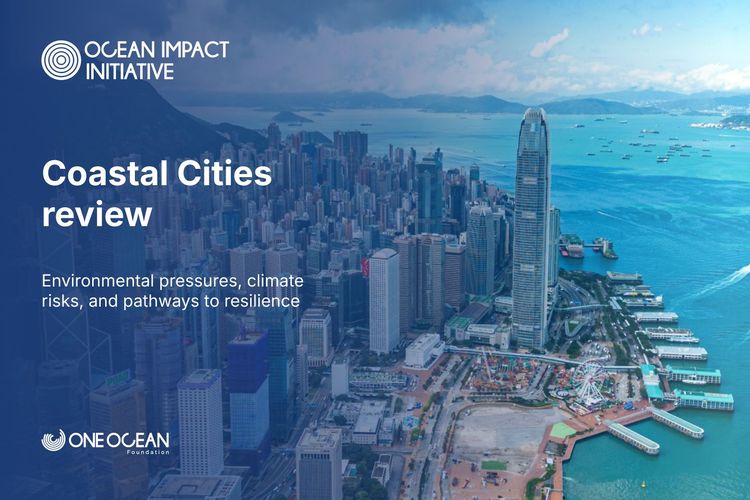
Coastal cities are urban centres positioned at the land–sea interface, concentrating a significant share of the world’s population and economic activity. Around 70% of the world’s largest megacities — those with more than 10 million people — are situated within 60 km of the coast, collectively generating about half of global GDP. This strategic position makes them key drivers of trade, innovation, and the blue economy, but also leaves them increasingly exposed to climate-related risks.
This report, developed as part of the Ocean Impact Initiative, explores the complex relationship between coastal cities and the ocean. It examines the main pressures urban coastal development exerts on marine ecosystems, and the risks cities face from climate change. It also highlights the significant potential of coastal cities to drive climate action through sustainable planning, strengthened governance, and the adoption of nature-based solutions.
DOWNLOAD THE REPORT
Vulnerability of coastal cities to climate change
Coastal cities are among the most exposed and at-risk areas from climate change, where sea-level rise, extreme weather, and environmental degradation converge with rapid urbanisation.
These pressures are further intensified by inequality and inadequate infrastructure, increasing exposure to flooding, ecosystem loss, and social disruption.
As a result, by 2050, many coastal cities are expected to face severe and widespread disruptions to both ecosystems and the human livelihoods that depend on them.
Potential pressures of coastal cities on the ocean
- Habitat and biodiversity loss: Land reclamation and coastal development degrade coastal ecosystems and drive biodiversity loss.
- Introduction of contaminants: Urban runoff, wastewater discharges, and industrial pollutants reach coastal waters and pollute the environment.
- Eutrophication: Nutrient‑rich discharges trigger harmful algal blooms and oxygen depletion.
- Marine litter: Poorly managed solid waste and growing tourism pressure increase plastic entering the ocean.
- GHG emissions: Dense populations, transport systems, ports, and energy‑intensive infrastructure contribute significantly to GHG emissions.
- Noise and light pollution: Ports, shipping, and coastal infrastructure disturb sensitive coastal species.
Sustainable pathways for resilient coastal cities
- Integrate nature‑based solutions such as restoration of mangroves, wetlands, dunes, and living shorelines to reduce habitat loss.
- Improve wastewater treatment and stormwater management, using green infrastructure to filter pollutants before they reach the sea.
- Promote sustainable coastal planning, limiting land reclamation and avoiding development in sensitive or high‑risk areas.
- Strengthen waste management systems, circular economy approaches, and marine litter interception solutions.
- Reduce emissions through energy efficiency, clean mobility, electrification of transport and port operations, and renewable energy.
- Adopt noise‑ and light‑reduction measures in ports and coastal infrastructure to protect marine life.
This review highlights the role coastal cities can play in driving systemic change— transforming risk into opportunity and contributing to a more resilient future for coastal ecosystems and communities.