How much is a forest worth if it produces no timber? And what about a seagrass meadow that protects coastlines, provides a habitat for hundreds of species and stores carbon? For decades, the economic answer has been: little, or nothing. What has no price does not appear on balance sheets, and what does not appear on balance sheets is easy to sacrifice.
Nature credits are among the most widely debated attempts to change this logic. They can help support a nature-positive economy and sustainable growth, provided they meet high-integrity standards and are transparently verified. In this article, we explore what nature credits are, what makes them credible, and why the fundamental question — how much is biodiversity worth? — remains open.
The Invisible Value of Biodiversity
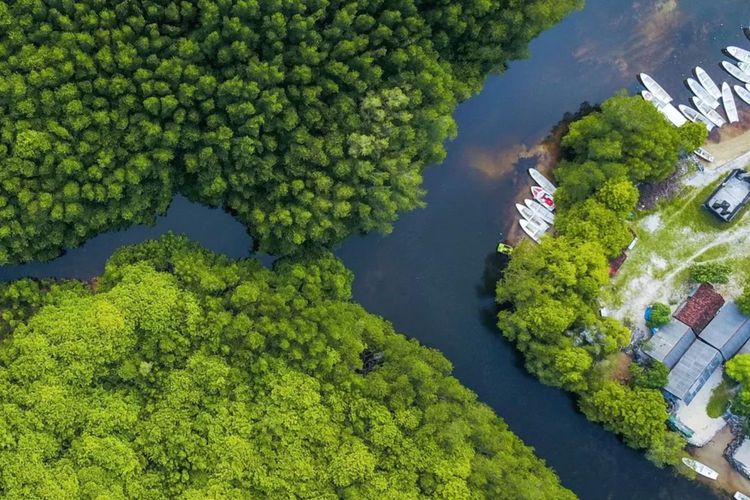
Markets recognise nature's provisioning services relatively well: fish caught, timber harvested and agricultural products. Its regulating services are far less visible: the carbon stored by mangroves, the coastal protection provided by seagrass meadows, and the water filtered by wetlands.
The paper Building Equitable and Nature-Positive Blue Natural Capital Markets, to which One Ocean Foundation contributed, highlights this imbalance. Fisheries markets are well established and even subsidised, while functioning markets for the regulating services provided by mangroves, salt marshes and seagrass meadows barely exist. The result is a paradox: an ecosystem can have enormous economic value without carrying a price tag. Scientists estimate that global ecosystem services are worth at least $33 trillion a year.
Nature Credits vs. Carbon Credits: What Are They and How Do They Differ?
A nature credit is a unit representing a positive outcome for nature, recognised and independently verified against agreed standards, that can be recorded, aggregated and held. This is the definition being developed by the European Commission in its roadmap on nature credits (COM(2025) 374, July 2025).
The difference between nature credits and carbon credits is substantial:
- Carbon credits use a single, relatively standardised metric: one tonne of carbon dioxide equivalent (CO₂e) avoided or removed.
- Biodiversity credits must account for species richness, habitat restoration and ecological functionality. For this reason, they are often non-fungible: tied to a specific local context and not easily interchangeable with credits from another location.
Why Put an Economic Value on Nature?
One of the most common concerns is that nature credits could turn nature into a commodity. The principle set out in the paper is clear: the aim is to finance and reward ecosystem services, not to sell ecosystems. A mangrove can provide carbon sequestration, but it also protects coastlines, creates habitats and supports fisheries — benefits that the price of carbon does not capture. Price, therefore, does not encompass the full value of nature. It can, however, make certain aspects of that value visible within economic systems that would otherwise tend to overlook them.
This is where metrics become crucial: what we measure is what we finance. If we measure only carbon, we risk rewarding interventions that maximise CO₂ sequestration even when they are not the best option for biodiversity, water resources or local communities. No single metric is therefore sufficient. We need complementary indicators covering ecosystem condition, biodiversity, ecosystem service flows, economic valuation, governance, equity and community well-being.
What Makes a Nature Credit Credible?
A nature credit is a promise: that a positive outcome for nature is real, measurable and lasting. This is why integrity must come before scale. There are six key requirements:
- Clear provenance and rights: Ownership, use and benefit rights associated with the project and the territory must be clearly defined.
- Measurement, Reporting and Verification (MRV): Outcomes must be measurable and verifiable, supported where appropriate by satellite remote sensing, LiDAR, drones, environmental DNA and artificial intelligence.
- Transparency: Environmental outcomes and financial flows must be traceable and subject to independent verification.
- Permanence: Financial mechanisms must ensure that conservation commitments are not abandoned after just a few years.
- Risk mitigation: Insurance, guarantees and blended finance can help make projects investable that would otherwise be considered too risky.
- Coordination: Common standards and interoperable systems are needed to avoid credits that cannot be meaningfully compared or exchanged.
There is one further requirement that cuts across all six: equity. A market can be efficient and still be unfair, creating risks of land dispossession, unequal revenue distribution or the exclusion of local communities from project design. Those who steward ecosystems must have a say in shaping these mechanisms and share in their benefits. Initiatives such as Mikoko Pamoja in Kenya and Tahiry Honko in Madagascar show how revenues from certified credits can also fund infrastructure and services for local communities.
Value Comes Before Price
Biodiversity has value even when that value cannot be expressed in monetary terms. Price does not create that value, but it can make certain aspects of it visible to those who decide how to allocate capital and shape public policy.
Private capital can help close the nature financing gap, but only if markets are designed around integrity, transparency and equity. To understand how these instruments could be incorporated into national accounts and government balance sheets, read [our article on nature finance: link to the second article].
Because the question is not simply how much nature is worth. It is also how much it costs to lose it.
Frequently Asked Questions About Nature Credits
What are nature credits?
Nature credits are units representing a positive, verified outcome for nature, such as habitat restoration. They can be recorded, aggregated and used to mobilise funding.
What is the difference between nature credits and carbon credits?
Carbon credits measure a quantity of CO₂ equivalent avoided or removed. Nature credits can represent broader improvements, including biodiversity, habitat quality and ecosystem functionality.
Do nature credits put nature up for sale?
Not if they are designed with integrity. They finance and reward an ecosystem service or a positive environmental outcome without transferring ownership of the ecosystem itself.
What does “high integrity” mean?
It means that the environmental benefit is real, measurable, independently verifiable and lasting, with transparent processes and a meaningful role for local communities.